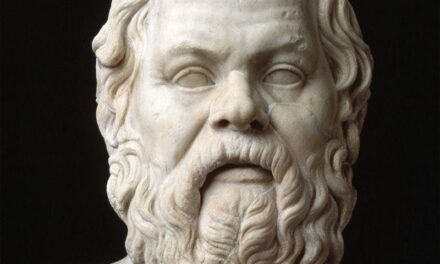
The Search for Truth and Justice
Plato was a student of Socrates and later founded a philosophical school in Athens known as the Academy.
His writings explored justice, knowledge, political authority, education, and the nature of reality.
In The Republic, Plato examined what a just society might look like and questioned whether political power should be held by those with the greatest wisdom.
His famous allegory of the cave describes prisoners who mistake shadows for reality.
The story is often interpreted as an exploration of ignorance, education, and the difficult process of gaining deeper understanding.
Plato’s ideas influenced later Greek thinkers, Roman philosophers, medieval scholars, and modern philosophical traditions.
Aristotle: The Observer of the Natural World
Aristotle studied at Plato’s Academy before developing his own philosophical approach.
He investigated logic, biology, ethics, politics, physics, literature, and many other subjects.
Unlike Plato’s emphasis on certain abstract forms, Aristotle placed great importance on observing the world and examining how things work.
In ethics, he argued that a good life involves developing virtues and practical wisdom.
His ideas about human flourishing have influenced moral philosophy for centuries.
Aristotle also tutored Alexander of Macedon, connecting Greek intellectual traditions with one of the most consequential military leaders in ancient history.
Together, Socrates, Plato, and Aristotle helped establish traditions of systematic questioning, argument, and investigation that remain central to philosophy and education