Goddess of Magic and Protection
Isis was celebrated for her devotion, magical power, and protective qualities. Her worship eventually spread far beyond Egypt.
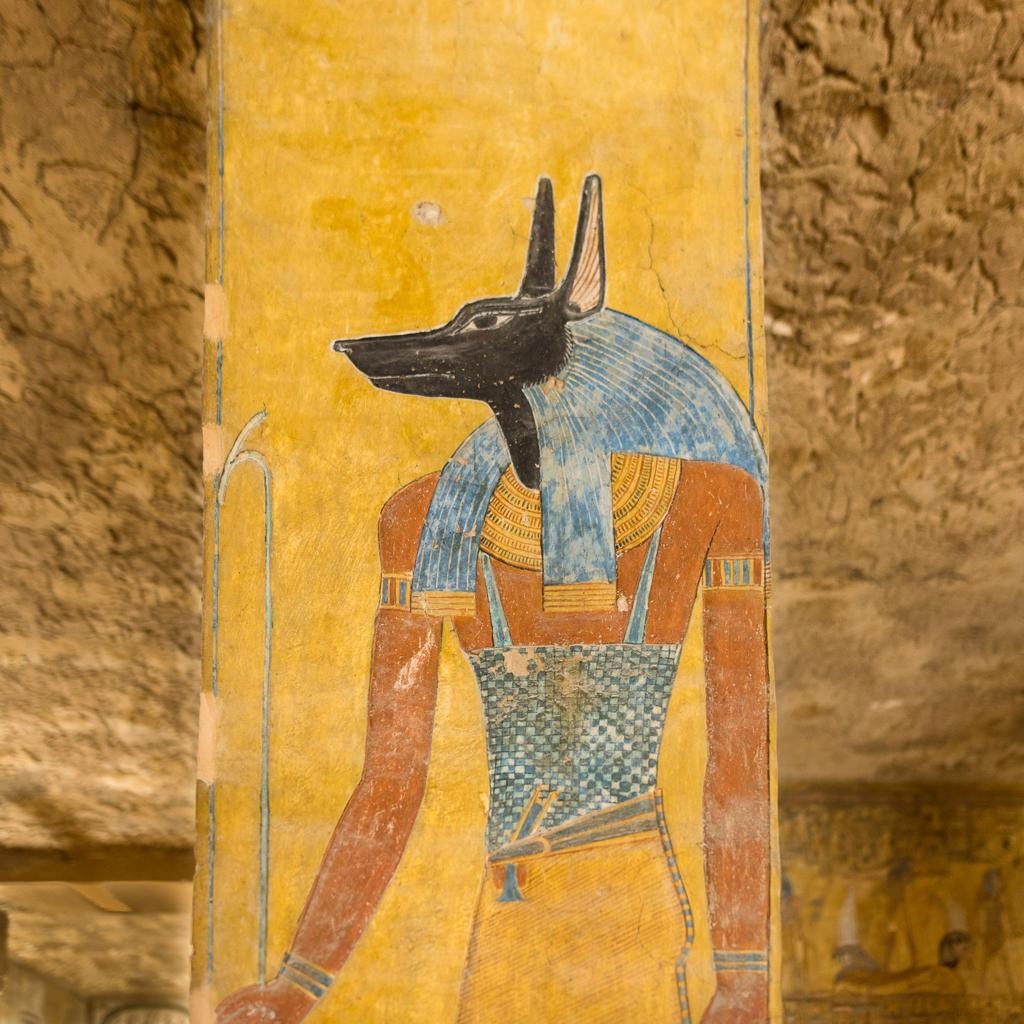
Anubis — Guardian of the Dead
Anubis was associated with embalming and funerary rites.
His image frequently appears in tomb art and depictions of the journey into the afterlife.
Mummification became one of the civilization’s most recognizable practices.
Specialists treated bodies through a complex process that could include removing internal organs, drying the body with natron, wrapping it in linen, and performing religious rituals.
However, burial practices varied considerably depending on wealth, period, and social position.
Egyptian beliefs about judgment also developed over time.
In a famous funerary scene, the heart of the deceased is weighed against the feather associated with Ma’at.
The image represents the question of whether a person had lived in accordance with truth and justice.
Tombs contained prayers, protective objects, images, and sometimes texts intended to guide the deceased through the afterlife.
These beliefs did not mean that every Egyptian shared identical ideas.
Egyptian religion evolved over thousands of years, and different gods, rituals, and traditions rose to prominence in different periods.