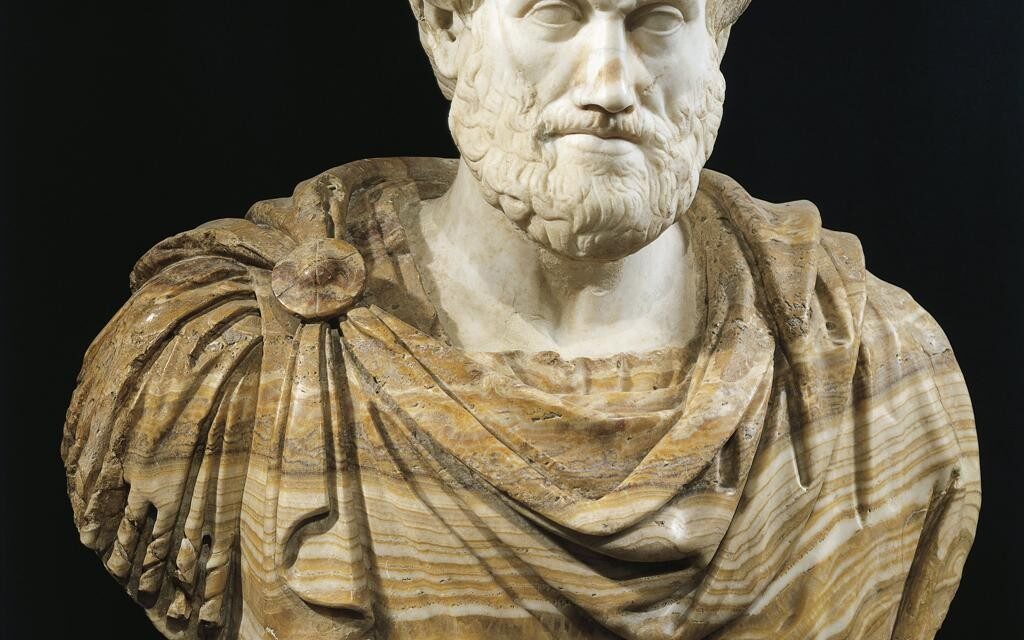
The Man Who Questioned Everything
Socrates lived in Athens during the fifth century BCE. He did not leave writings of his own,
so our understanding of him comes largely from the works of students and later authors, particularly Plato and Xenophon.
Socrates became famous for questioning assumptions and challenging people to explain what they meant by concepts such as justice, courage, and virtue.
Rather than simply providing answers, he often used a method of questioning that exposed contradictions in an argument.
His approach suggested that recognizing the limits of one’s knowledge was an important step toward wisdom.
In 399 BCE, Socrates was tried by an Athenian jury and sentenced to death.
The charges concerned impiety and corrupting the youth, within a politically unsettled Athens.
According to Plato’s account, Socrates accepted the sentence and drank a poison prepared from hemlock.
His death became one of the most famous episodes in the history of philosophy,
raising questions about the relationship between the individual, the state, freedom of thought, and the law.